Dieter Rams: Less, But Better
German designer Dieter Rams challenged us to rethink what good design means, showing that less, done exceptionally well, is often better.
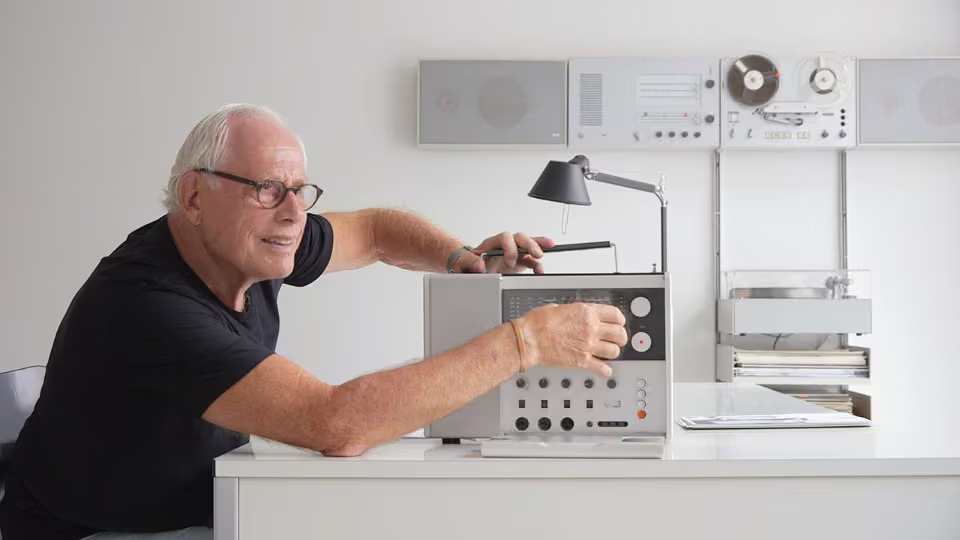
Ten principles that changed the way we think about good design.
We live in a world that rarely stops adding things. More features, more choices, more products, more noise. Every year brings another generation of devices promising to do more than the last. Yet, somewhere along the way, it's easy to lose sight of a rather simple question: does any of it actually make things better?
For German industrial designer Dieter Rams, this was a question worth asking.
Throughout his career, Rams challenged the idea that progress necessarily meant adding more. Instead, he believed that good design should be purposeful, understandable and enduring. It should make life easier, not more complicated. It should serve a genuine need, rather than simply create another reason to buy something.
His philosophy was distilled into ten principles of good design. First developed during his time at Braun, they have since become something of a manifesto for thoughtful design, influencing generations of designers and shaping the way we think about the objects we use every day.
But their relevance extends far beyond the things we buy.
At their heart is an idea that feels increasingly important in a world obsessed with doing everything: the value of doing a few things exceptionally well.
The man behind the principles
Dieter Rams was born in Wiesbaden, Germany, in 1932. Having initially trained as an architect and interior designer, he joined the German electronics manufacturer Braun in 1955.
At the time, Braun was beginning to establish itself as a modern consumer electronics brand. Rams would go on to become one of the most influential figures in its history, eventually serving as head of design.
His approach was distinctive. Where many manufacturers saw an opportunity to make products more elaborate, Rams looked for ways to make them simpler. He believed that design should begin with understanding the purpose of an object and then finding the clearest possible way to fulfil it.
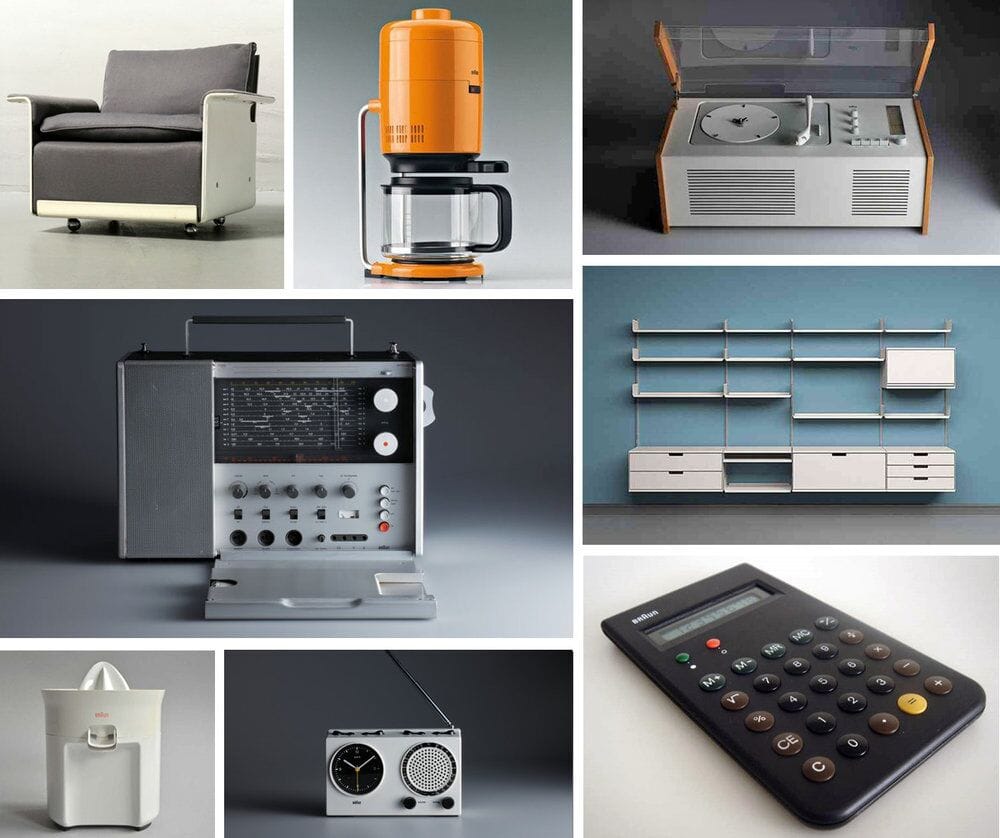
The results were products that felt remarkably different from much of the consumer electronics of their time. Radios, record players, calculators and household appliances were stripped of unnecessary decoration, leaving behind clean lines, intuitive controls and a clear sense of purpose.
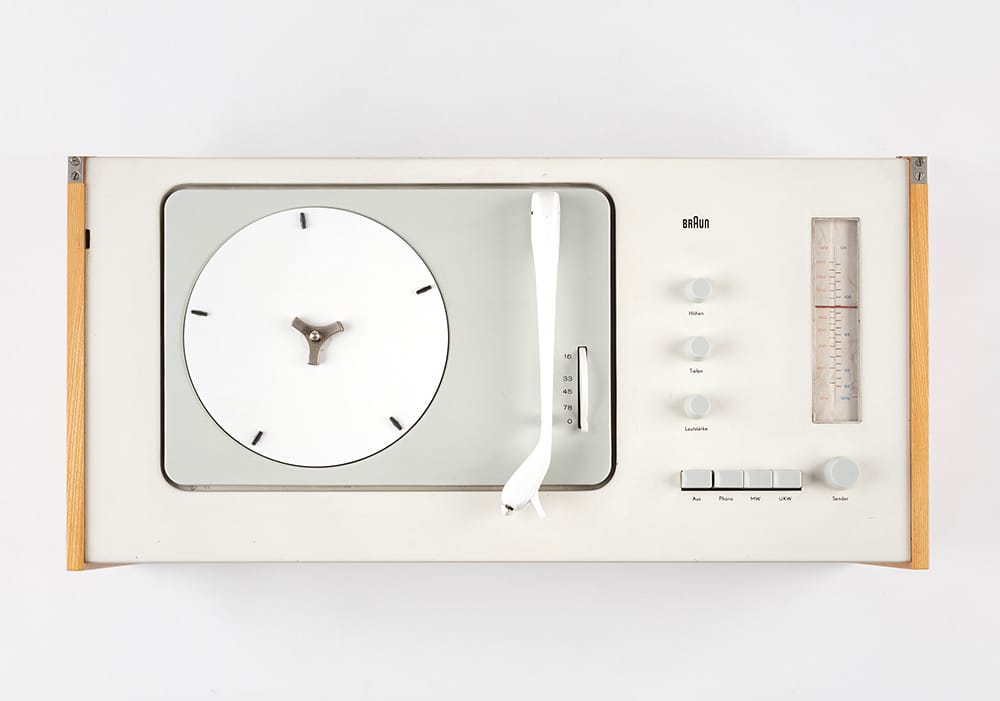
His work on the Braun SK4 record player, often nicknamed the 'Snow White's Coffin' because of its transparent acrylic lid and white metal casing, helped establish a new visual language for consumer electronics.
His influence extended beyond Braun. Rams also worked closely with furniture manufacturer Vitsœ, developing products such as the 606 Universal Shelving System, which embodied his belief that good design should be adaptable and last for generations.
There is a consistency to his work that is difficult to ignore. Whether designing a radio or a shelving system, the same principles were always present.
Rams eventually put those principles into words.
Ten principles of good design
Rams believed that good design was not simply about how something looked. It was about how it worked, how it made people feel, how long it lasted and whether it deserved to exist in the first place.
His ten principles offer a framework for understanding what makes something genuinely well designed.
1
Good design is innovative
The possibilities for innovation are not, by any means, exhausted. Technological development is always offering new opportunities for innovative design. But innovative design always develops in tandem with innovative technology, and can never be an end in itself.
2
Good design makes a product useful
A product is bought to be used. It has to satisfy certain criteria, not only functional, but also psychological and aesthetic. Good design emphasises the usefulness of a product whilst disregarding anything that could possibly detract from it.
3
Good design is aesthetic
The aesthetic quality of a product is integral to its usefulness because products we use every day affect our person and our well-being. But only well-executed objects can be beautiful.
4
Good design makes a product understandable
It clarifies the product’s structure. Better still, it can make the product talk. At best, it is self-explanatory.
5
Good design is unobtrusive
Products fulfilling a purpose are like tools. They are neither decorative objects nor works of art. Their design should therefore be both neutral and restrained, to leave room for the users self-expression.
6
Good design is honest
It does not make a product more innovative, powerful or valuable than it really is. It does not attempt to manipulate the consumer with promises that cannot be kept.
7
Good design is long-lasting
It avoids being fashionable and therefore never appears antiquated. Unlike fashionable design, it lasts many years – even in today’s throwaway society.
8
Good design is thorough down to the last detail
Nothing must be arbitrary or left to chance. Care and accuracy in the design process show respect towards the consumer.
9
Good design is environmentally friendly
Design makes an important contribution to the preservation of the environment. It conserves resources and minimises physical and visual pollution throughout the lifecycle of the product.
10
Good design is as little design as possible
Less, but better – because it concentrates on the essential aspects, and the products are not burdened with non-essentials. Back to purity, back to simplicity.
Simplicity is the key to excellence.
Beyond design: A philosophy for doing things well
It would be easy to look at the ten principles as a guide for industrial designers. After all, that is where they began.
But their real value is that they offer a way of thinking that can be applied to almost anything.
Consider the businesses we admire. The ones that resist the temptation to expand into every possible market, instead concentrating on a particular product or service and finding ways to make it better.
Consider the people who dedicate years to mastering a craft, often working on details that few others would notice.
Or the products that remain in use for decades, not because they are particularly complicated, but because they fulfil their purpose so well that there is little reason to replace them.
There is a common thread running through all of them.
They understand what matters, and they have the discipline to concentrate on it.
That is perhaps the most interesting thing about Rams' philosophy. It isn't really about minimalism, despite the way his work is often described. Nor is it simply about making things look beautiful.
It is about intention.
Knowing what you are trying to achieve, understanding what is necessary to achieve it and having the confidence to leave everything else out.
That is as relevant to building a business as it is to designing a radio. It applies to the way we work, the things we buy and the time we choose to spend on the things that matter.
Less, but better
Dieter Rams' influence can still be seen throughout contemporary design. His work at Braun helped establish a visual language that continues to inspire designers today, while his principles remain a reference point for anyone interested in making things better.
Yet perhaps his most important contribution wasn't a particular product or even the ten principles themselves.
It was the challenge he presented to an increasingly complicated world.
We are constantly encouraged to do more, buy more, offer more and be more. Businesses are pushed to expand. Products acquire features simply because they can.
Rams offers a different perspective.
Perhaps progress isn't always about adding something. Perhaps it is about recognising what can be removed. Perhaps quality comes not from trying to do everything, but from understanding what matters most and giving it the attention it deserves.
There is a quiet confidence in that approach. It takes restraint to resist the temptation to add more, and conviction to believe that what remains is enough.
Good design, as Rams demonstrated throughout his career, is rarely about making something more complicated.
It's about making it better.
Less, but better.
"Perfection is achieved, not when there is nothing more to add, but when there is nothing left to take away." - Antoine de Saint-Exupéry